PsychNewsDaily Publishers
100 Summit Drive
Burlington, MA, 01803
Telephone: (320) 349-2484
PsychNewsDaily Publishers
100 Summit Drive
Burlington, MA, 01803
Telephone: (320) 349-2484

Looking for therapy in English in Amsterdam? These eight questions help you check training, language, costs, referrals and fit before you commit to a first session.
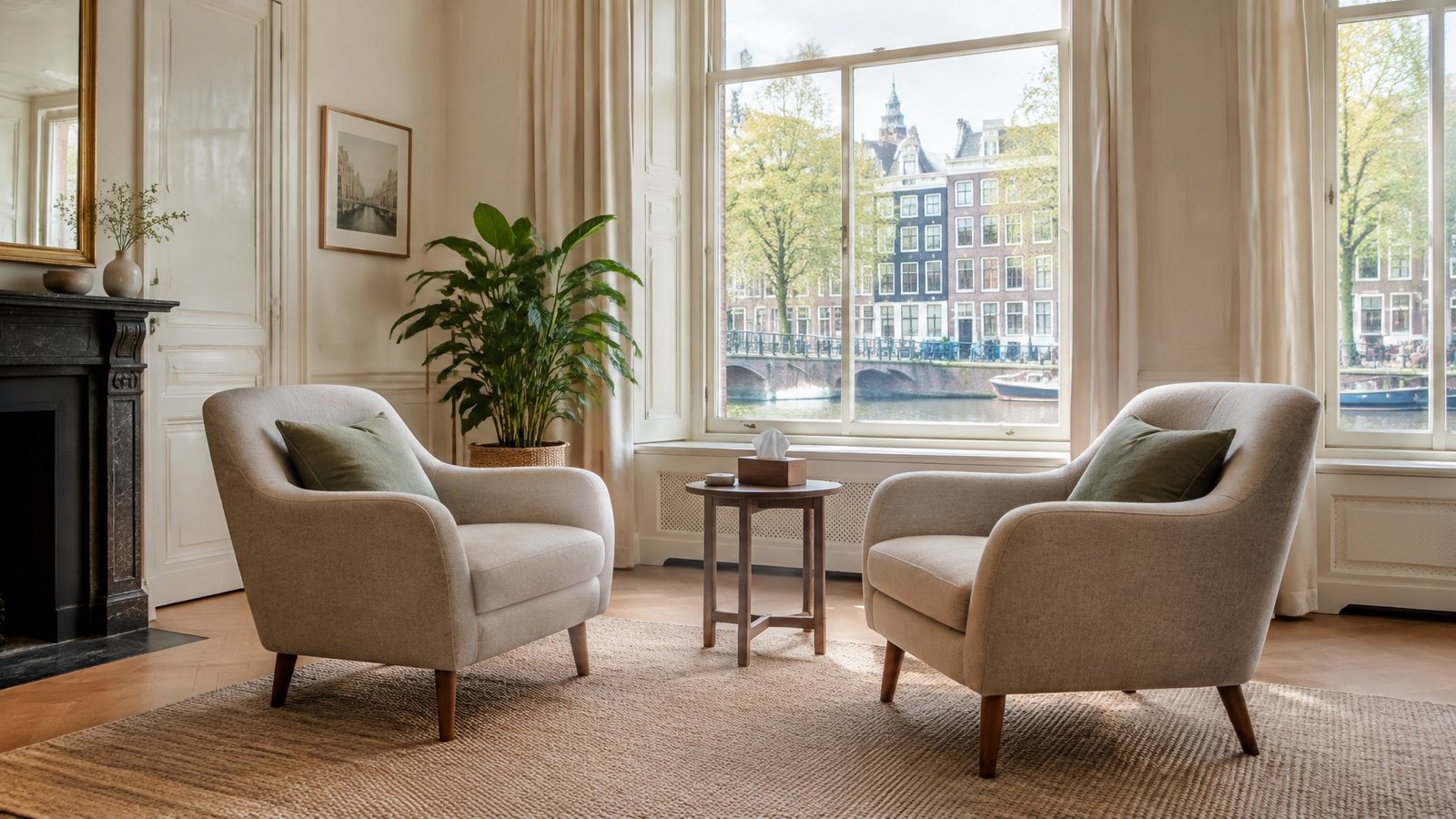
Moving to a new country can stir up more than practical problems. Loneliness, work pressure, relationship strain and old worries that travelled with you can all feel heavier when you are far from home and still learning how things work.
Many people living in Amsterdam want to talk to someone in English, or in their own first language, rather than struggle to describe feelings in Dutch. The good news is that the city has a wide choice of practitioners who work in English. The harder part is knowing how to choose. These eight questions will help you narrow the field before you book a first appointment.
In the Netherlands, several titles are protected by law and linked to the national BIG register for healthcare professionals. A GZ-psycholoog (healthcare psychologist) and a psychotherapeut have completed recognised postgraduate training and are registered. Other titles, such as counsellor or coach, are not protected in the same way.
That does not make a counsellor a poor choice. It simply means you should know what you are getting. Ask which register the practitioner is listed in and check it yourself online. A good practitioner will be glad you asked.
If you have Dutch basic health insurance, some mental health care can be covered, but usually only when your GP (huisarts) refers you and the practitioner has a contract with your insurer or accepts reimbursement. Your annual deductible (eigen risico) normally applies.
Ask the practice directly whether its care is reimbursed, which insurers it works with and whether you need a referral letter. Private sessions outside the insurance system are also common among expats, especially when someone wants to start quickly. Ask about the fee before the first session so there are no surprises.
Fluency matters in therapy, because so much depends on nuance. Some practices in Amsterdam work in several languages. Expat Therapist Amsterdam, on Karel Doormanstraat in Amsterdam West, has supported expats since 2011 and offers therapy in English and Italian, covering issues such as anxiety, depression, relationship conflicts and addictions.
Functioning Psychology, on De Cuserstraat in Amsterdam Zuid, is led by GZ-psychologist Francesca Eleuteri and offers reimbursed therapy in Italian, English and Dutch for both expats and Dutch clients. If your first language is not English, it is worth asking whether a practitioner can work in it.
Therapists use different methods. Cognitive behavioural therapy (CBT) focuses on patterns of thought and behaviour and is often structured and time limited. Other approaches spend more time on relationships, emotions or past experiences.
You do not need to become an expert in therapy models. Ask the practitioner to explain their approach in plain words and how it would apply to what you are dealing with. If the answer is vague, that is useful information too.
Expat life brings its own themes: identity, distance from family, a partner who followed you for a job, cultural friction at work, or the slow process of building a social circle from scratch. A therapist who has worked with many international clients will often recognise these patterns quickly.
Ask about experience with your specific concern as well. Someone who works mainly with couples may not be the best match for a sleep problem, and the reverse is also true.
Waiting times in Dutch mental health care can be long, especially for reimbursed care. Ask when you could realistically start and whether the practice can suggest alternatives if the wait is too long. Some people start privately and switch later, or begin with their GP’s practice support worker (POH-GGZ), who is often available sooner.
A first appointment is usually an intake. You will talk about why you came, your history and what you hope to change. It is also your chance to judge how it feels to talk to this person.
Research on therapy repeatedly points to the relationship between client and therapist as one of the most important ingredients of good outcomes. If you do not feel heard after a session or two, it is reasonable to look elsewhere. Changing therapist is not a failure.
Ask how the practice handles a crisis and what you should do outside office hours. In the Netherlands, your GP or the out-of-hours GP service (huisartsenpost) is the usual first step, and 112 is the emergency number. Knowing this before you need it is part of looking after yourself.
A practical first step is to make a short list of three practitioners, check their registration and languages, and send each the same short email describing what you are looking for. Compare the replies on clarity, warmth and practical details such as fees and waiting time.
For a wider overview of how mental health support works in the city, including the different types of practitioners and how referrals work, see this guide to finding a psychologist or therapist in Amsterdam.
Finding the right therapist abroad takes a little more effort than at home, but the questions are the same: is this person qualified, can we talk easily, and can I afford it? Ask them early, trust your impressions, and give yourself permission to keep looking until the fit feels right.